
It was an embarrassment of riches. Of a comedy of errors.
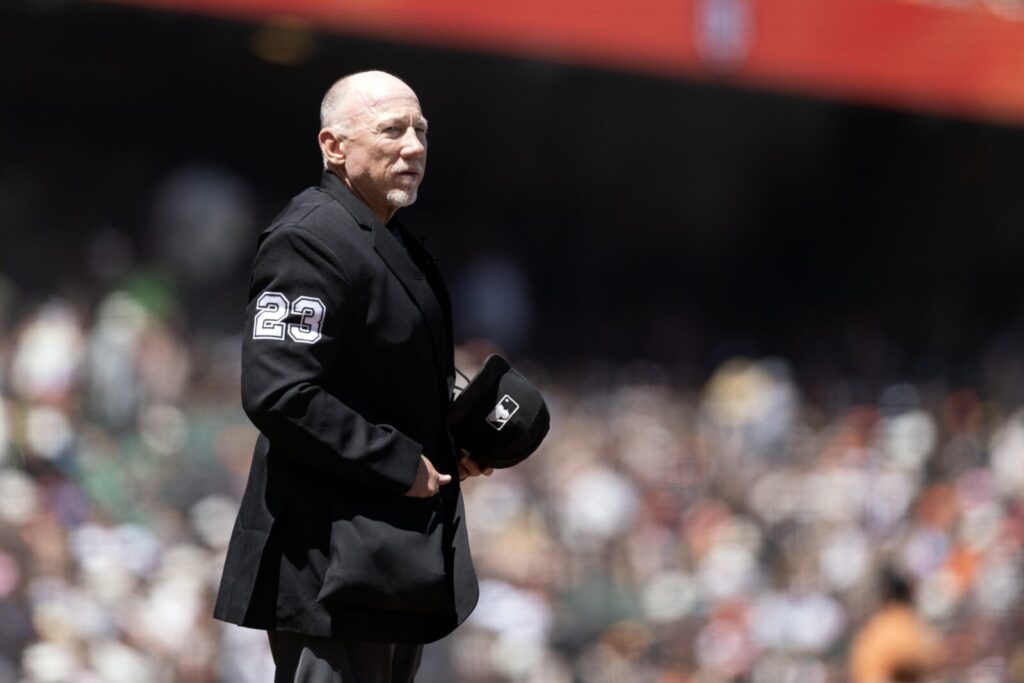
MLB umpires simply embarrassed themselves during the Colorado Rockies final road trip before the break for the 2026 All-Star Game.
Just before the trip began, seven umps announced their retirement. No public reasons were given. Maybe they weren’t too keen on the new ABS era. Perhaps it was just their moment to step away. Either way, it was another note on a time that has been a difficult one for those who call the balls and strikes. For those who govern the game.
And they didn’t make things much easier for themselves during the Colorado Rockies trip to California.
For example, twice on this trip Tyler Freeman was clearly hit by a pitch but umpire replay review refused to see it. Once it even turned a ball into a strike on a foul ball. Fun times in the challenge department.
On The Road Again
The weirdness began in the first game against the Los Angeles Dodgers. In the middle innings of a two-run game, speedster Jake McCarthy was called out on an unusual double play.
He was stealing second when a medium deep flyball was sent to center. It was caught as he popped up and off the bag, heading back to first. He easily beat the throw. But he was ruled out on a double play because he did not “go back and touch second base.” It was an odd play because McCarthy never even feigned a move toward third. He did land a bit awkwardly on the third base side of the bag though.
No player thinks to retag the bag they were making contact with a split second ago, so neither did McCarthy. If you squint your eyes while looking at the rulebook you might find that this was ruled technically correct. But it’s the classic “doing too much” kind of thing that Angel Hernandez became infamous for. A rarely cited rule gets pulled out entirely against the spirit of the rule to give an advantage to the Dodgers.
No biggie. Sometimes a borderline call goes against you. The Dodgers took a three-run lead into the ninth but somehow the plucky underdogs managed to tie it up. Though, they should have had the lead.
Rookie Cole Carrigg slashed a line drive into the oppo gap with the bases loaded and Hunter Goodman steamed around the bases for the go-ahead run. He was ruled safe on a close play at the plate. Review after review looked inconclusive. But a call that would stand if this game had been against the Reds and not the Dodgers was overturned instead.
A Challenge Within A Challenge
Interestingly, manager Warren Schaffer demanded the play be reviewed a second time because catcher Dalton Rushing was blocking the plate. This, again, is a call that is 50/50 but only goes one direction. This time the call on the field stood. Because of course it did.
Instead of taking a lead into the bottom of the ninth, the Rockies only tied the Dodgers. It might well have ended right there thanks to more poor umpiring if not for the brand new toy. ABS. With the winning run at second base and two strikes on Andy Pages, a pitch entirely in the zone was ruled a ball. Luckily, Goodman challenged and sent the game to extras. It was their fourth successful ABS challenge of the game.
Carrigg scored the go-ahead run in the 10th despite Rushing blocking the plate. Again. It could have resulted in injury but instead resulted in a tiff that went semi-viral. But the Dodgers ultimately walked it off in the bottom of the frame.
These Guys Need Help?
Flashforward to the second game of the set. Carrigg
This time, the Rockies needed the benefit of five successful ABS challenges in the eighth and ninth inning to get the result they deserved.
With rookie catcher Braxton Fulford behind the dish, the very first pitch of the bottom of the ninth was missed and not challenged. With the Rockies clinging to a one-run lead, their new closer Jordan Romano had to fight the heart of the toughest lineup in baseball and the home plate umpire.
He missed, and was corrected, on two consecutive pitches in the final at-bat against Freddie Freeman who is pretty good and doesn’t need the help. The Rockies won 4-3. Thank the robots. Or the fact that the Rockies third-string catcher is better at calling balls and strikes than Adam Beck was that night.
After all that the Dodgers had the temerity to score three runs in the first inning of the third game and still burned both of their challenges. Apparently they thought they weren’t getting a long enough end of the stick.
Rookie pitcher (are we sensing a theme here?) Gabriele Hughes recovered admirably but the visitors fell by just one run yet again in an incredibly close series between David and Goliath.
Then it was off to San Francisco where somehow things got even weirder.
What Is A Catch?
The first game was a nothingburger from the Rockies perspective. Though, credit where it’s due, it was a rare game with zero successful ABS challenges. Nice work Junior Valentine.
But the second game included a play that none involved will soon forget.
In the second, Freeman clearly caught a sinking liner but it was ruled no catch. Even after review appeared to clearly show a catch, the call on the field stood. Apparently this crew didn’t have enough evidence to overturn their obviously wrong call but the crew in LA felt differently on (at best) a 50/50 play at the plate that decided the game. OK.
The Freeman non-catch wouldn’t factor into the decision. But it was an omen. A sign of things to come.
In the fifth with the game tied at one, the Rockies finally got one. A 50/50 call on a throw from Carrigg to get Arraez at second stood in their favor. Then all hell broke loose.
The Giants took a 2-1 lead in the top of the eighth on a Rafael Devers grounder that barely snuck past the glove of a diving TJ Rumfield at first.
Mickey Moniak singled to start the Rockies response. Troy Johnston walked. McCarthy, the Rockies most fun player in a while, executed a perfect bunt to load the bases. After a tough at-bat that felt like it lasted a half hour, Kyle Karros managed a broken bat single to center to drive in a pair and give his team a 3-2 lead. Carrigg delivered what turned out to be a much-needed insurance run. And his night was about to get even more interesting.
Making Stuff Up
First, Drew Cavanaugh drew a walk against Romano. He was replaced on the bases after a force out by Grant McCray. The much faster runner then stole second. Arraez walked to put the tying run at first and the winning run at the plate.
Casey Schmitt, who has now haunted the Rockies in every way imaginable this season, hit a hard liner to center. On came the rookie Carrigg with an all out dive. He plays no other way. But did he catch the ball?
We would get an answer in hindsight. But no umpire made a signal in the moment on what appeared to the naked eye to be an incredible diving catch. The runners, wisely, did not move.
Carrigg was clearly unsure where to throw the ball but with no signal for an out it made sense that the force would still be in play. The Rockies tagged all the bases and the runners just in case. Then it was time for the umpire crew to get together and decide what to do.
Crew chief Lance Barksdale took to the mic. He informed everyone, frankly for the first time, that the call on the field was that a catch indeed had been made. Oh, sure, now. Somehow even when the call goes their way it ends up screwing the Rockies.
What’s The Call Again?
Had the call on the field been no catch, the game would have been over. But with the phantom call, a review meant they had to absolutely confirm that Carrigg did not trap the ball. In their defense, evidence looked clear enough that he didn’t. Still a hell of a play. So the call has to be overturned… but what does that mean? Apparently, in this case, it meant that Schmitt was just awarded a single and the Giants were awarded second and third base despite the runners never actually advancing on the play.
No biggie. Just have to bear down on Rafael Devers with the bases loaded, one out, grasping on to a two-run lead. Romano got Devers to fly out to center for the sac fly then walked Willy Adames to narrow the game to the slimmest possible margin.
After all that excitement, and all those pitches, Romano was lifted for youngster Juan Mejia. And in perfect baseball fashion he ended the game by throwing just one quality pitch to get a ground out to second. Whew.
It should also be noted that the Rockies had three key ABS challenge overturns in that 4-3 win to the Giants zero.
Onward and Upward
Mercifully, the next two games were relatively normal 4-2 and 3-1 losses. Though, again, the Rockies successfully challenges balls and strikes six times over those two games. And again the Giants had none. One was particularly of note as Kyle Freeland became just the third Rockies starter to issue a challenge this year. And the second to win a challenge. Then he did it again an inning later.
To say it felt like the Rockies were playing against more than just their opponents on this road trip is an understatement.
Still, they comported themselves well. Apart from the Thursday game that got away from them late and ended 8-2, each contest was decided by one or two runs. A whole lot of guys who are getting their first baseball cards this year are making an impact. And change is in the air.
Meanwhile the San Francisco Giants have alienated their fanbase and are headed for the cellar. Their rebuild is only about to begin. The Rockies are already cooking with purple flame.
So yes, Colorado is still in last place in the NL West. And yes, they have a long way to go. But as long as they keep playing like they did on this trip, and as long as umpires keep retiring, things are trending in the right direction.