
Not since their very first year in 1993 has a Colorado Rockies season been more anticipated for reasons that have almost nothing to do with wins and losses. Back in their inaugural year, followers of the brand-new expansion franchise were just happy to have a new Major League Baseball team of their own to watch play. The wins and losses were secondary to the experience of having a big league baseball team with an unknown and potentially bright future.
Followers of the 2026 Colorado Rockies are feeling the same way – the wins and losses won’t matter as much given the “newness” that has taken root at 20th and Blake. With a new and improved front office in place, the future is all but guaranteed to be bigger and brighter than the recent past. If we’re being truthful, it can’t help but be better.
The similarities pretty much end there, however. This year’s Rockies aren’t going to be contenders, but they won’t be operating like an expansion franchise, either.
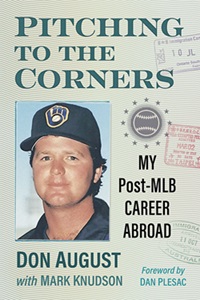
The ’93 Rockies used 29 pitchers (including this writer) that season in what was almost an “audition” of sorts. Most were acquired via an expansion draft, and some (like me) were signed as free agents. A couple, like Opening Day starter David Nied, were brought in via the trade route in an effort to begin to stockpile talent. There wasn’t much in the way of “trade bait” on that first squad.
There’s plenty of trade bait on the 2026 Rockies roster. Starting with the starting rotation.
This year’s Rockies will roll out a starting five with a combined 52 years of big league experience. Only 29-year-old Ryan Feltner – the youngster and fifth starter heading into the season – has less than nine big league seasons under his belt.
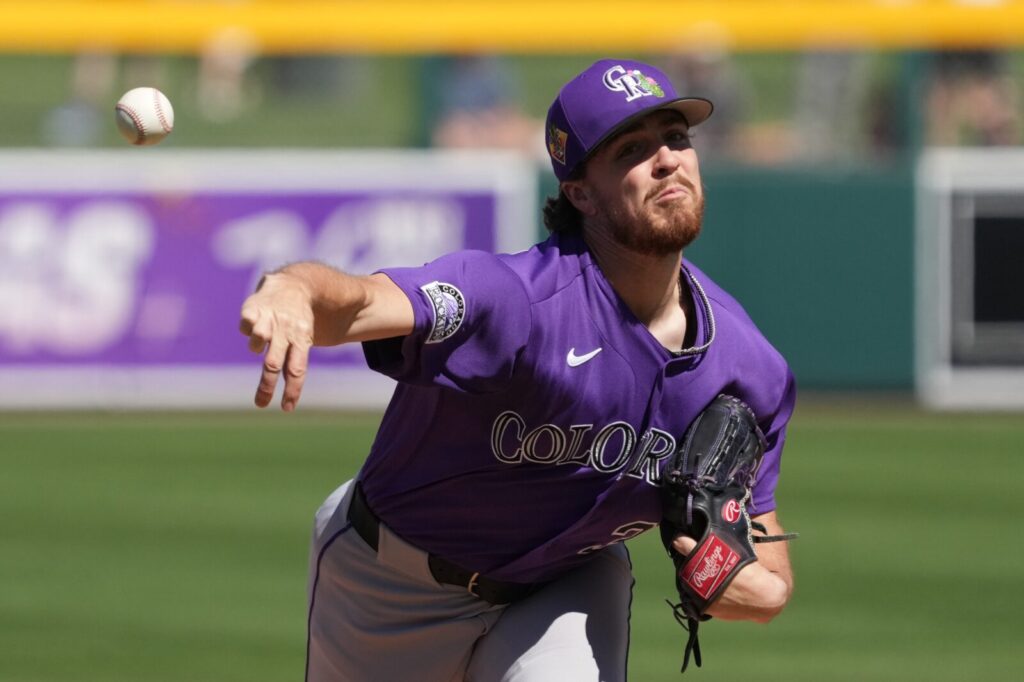
Opening Day starter Kyle Freeland has spent all nine of his MLB seasons in Colorado, and if he has his way, will spend the next nine doing the same thing. The Colorado native is loyal to the corps and to the hometown team. Some would like to see the 32-year-old southpaw accept a trade to a contender so that he could taste postseason play once or twice in his career. Freeland has reportedly turned down all opportunities like that and wants to remain a Rockie.
As for the other three starters – all newcomers to the revamped Rockies organization – Michael Lorenzen, Jose Quintana and Tomoyuki Sugano – there isn’t, and shouldn’t be any such ‘loyalty’ hang ups, because they’re all here as placeholders for younger pitching prospects within the organization, and if they get a chance to end up on a playoff squad via a mid-season trade will each gladly accept that fate.
This could explain why the Rockies signed these guys in the first place. Give them the chance to start a few games and hopefully improve their trade value while the home grown Rockies prospects work on improving their standing within the eyes of the organization. In past seasons, several Rockies prospects have been tossed into the fire a little too early, with not so great results.
The foursome of veteran starters should help alleviate that issue. For example, top prospect Chase Dollander, who made his big league debut last season as a starter with not so great results is starting this season as part of the long relief group in the Rockies bullpen. Having veterans to watch and learn from – at least for a few months – should aid in his learning process.
It’s more than fair to expect this Rockies front office to be much quicker to pull the trigger on trades, even well before the trade deadline at the end of July. The hope is they get better returns than the Rockies have gotten in the past, and that those newly acquired players can join forces with the organization’s young prospects and elevate the on field product, in much the same way as happened between 1993 and 1995, when those expansion Rockies shocked the baseball world and made the postseason well ahead of schedule.
What Rockies fan wouldn’t be in favor of that?