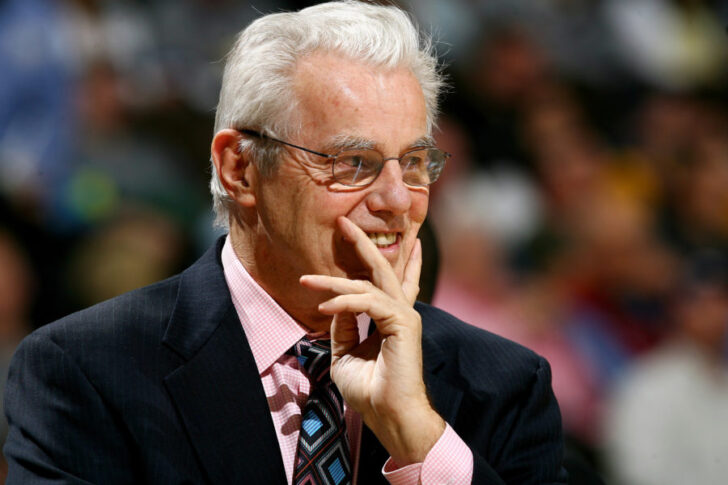
If you happened to be at McNichols Sports Arena for a Denver Nuggets game in the 1980’s, you saw a high-octane, high-scoring and wildly entertaining type of basketball — and a notoriously grumpy character patrolling the sidelines, haranguing referees and loosening his tie as he went.
Doug Moe, as the architect of the “passing game,” preached a kind of rapid-fire, egalitarian offense that echoes throughout today’s NBA, but it all started right here in Denver.
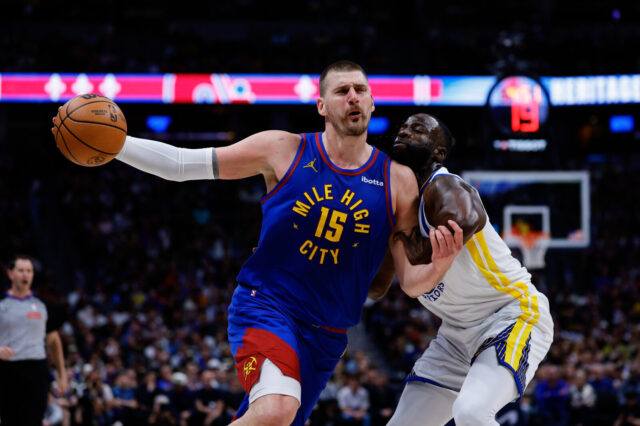
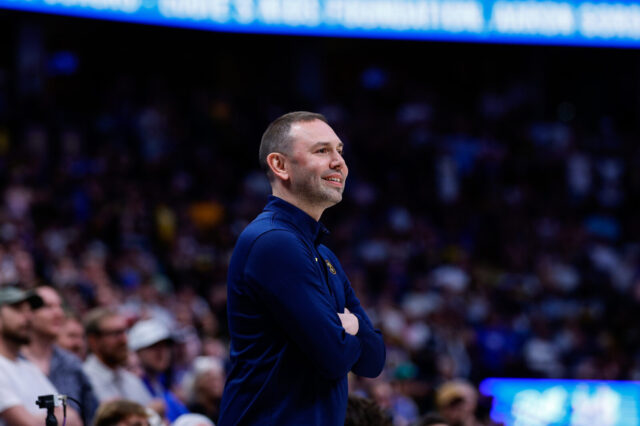
Moe passed away at the age of 87 this week, and the Nuggets canceled their first post-All-Star game practice in response on Tuesday. The 432 regular season wins that Moe collected as the Nuggets’ head coach stood from his departure in 1990 until it was broken by eventual NBA champion Michael Malone in his final season with the Nuggets in 2024 — 34 years later.
— Denver Nuggets (@nuggets) February 17, 2026
The former two-time All-American at North Carolina was an assistant coach with the ABA’s Carolina Cougars and the Nuggets (under then head coach Larry Brown) before taking over the NBA’s San Antonio Spurs in 1976. Moe led the Spurs to a combined 177-135 (.567) regular-season record before being dismissed and joining Brown as an assistant again in Denver. Brown was dismissed during the 1980-81 campaign, and Moe finished out the season as head coach. Moe would lead the Nuggets through the next nine full seasons, making the playoffs in each one of them, and earning NBA Coach of the Year plaudits in 1988.
That season, Moe told the Chicago Tribune that “it takes discipline to play in our system. Basically what we’re trying to do is keep teams off balance, not let them get set. We’re pretty good defensively. We’re not a great shooting team. But we get up more shots than our opponents, which allows us to shoot a little poorer. Our whole philosophy is to attack.”
His offense propelled the Nuggets to new heights. With future Hall-of-Famers like David Thompson, Dan Issel and Alex English on the court, Moe’s Nuggets led the NBA in scoring six times during that span, but could never advance past the Western Conference semifinals (though the all-time great ‘Showtime’ Lakers had quite a bit to do with that).
Moe’s light-hearted, grouchy-for-show demeanor made him a fan favorite, and became as identifiable with the Nuggets as any of its players, and he never strayed too far from the franchise in his retirement.
In 2018, Moe was honored with the Chuck Daly Lifetime Achievement Award, where then-Mavericks coach Rick Carlisle explained, “In the 1970s and 80s, Doug Moe established a pace-and-space game that was decades ahead of its time.” Carlisle went on to call Moe “a true visionary.”
Once called “bilingual” during a broadcast for his familiarity with English and profanity, Moe’s rants were legendary, but they were also short-lived. “When Doug gets on you, his voice cuts through to your soul,” former player (and former Nuggets exec) Kiki Vandeweghe explained in 2018. “If you play poorly, he’ll yell and scream and hate you during the game. But after the game, you can still be the best of friends.”
Moe’s shadow still looms large over not only today’s NBA, but with the Nuggets and their fans in particular. Near the end of his tenure as the Nuggets’ head coach, longtime sportscaster Ron Zappolo said that Moe’s impact was generated “not only because of how successful he was, but how colorful he was and how kind he was. There are a lot of people walking around today who feel like they were Doug’s best friend.”