
The Colorado Rockies have made a lot of noticeable improvements on the field this season, and are in a position near the season’s halfway point to potentially not finish in last place in the difficult National League West. Continued improvements in the second half could theoretically vault them over the struggling San Francisco Giants before the fall weather sets in.
That – or even getting close to that – would be a major step forward in the first season of the Paul DePodesta Era.
But not all the changes at 20th and Blake after last season’s disaster have been for the better. While the Bud Black Era ended badly for the veteran manager early last year, he and his veteran pitching coaches were much better at the job of managing a pitching staff (lack of big-league ready talent aside) than their replacements.
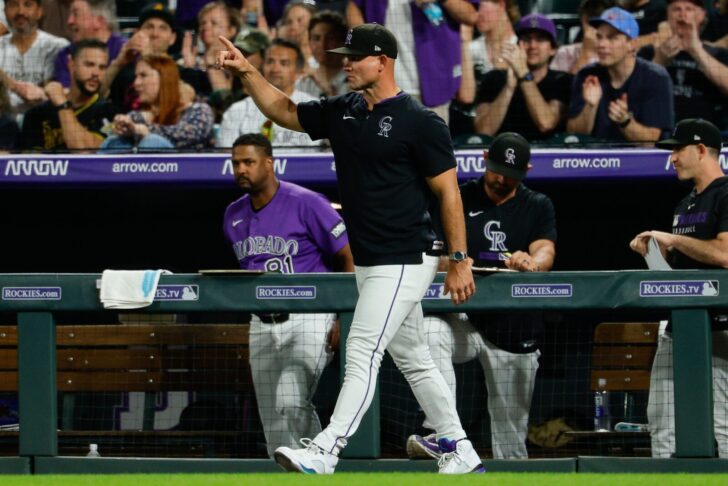
Manager Warren Schaeffer can’t be blamed for the overall performance of the pitchers the Rockies currently have on the roster (and the injured list) any more than Black should have been. But the challenge of the job is to get the most out of what you’re given to work with, and Schaeffer – along with wet-behind-the-ears newbie pitching coach Alon Leichman – have far too often botched the critical job of using their bullpen correctly.
This is where I offer another reminder that Leichman never played any professional baseball in America. He has zero professional playing experience to fall back on, nor the important “been there, done that” perspective that comes with it. He’s an analytics guy, period. We all know that analytics have a big role in all phases of the game today, but experience matters, too – especially when you’re talking about coaching and counseling pitchers at Coors Field.
There’s a saying in baseball that was made famous in the movie Bull Durham. Actor/catcher Kevin Costner says, “Don’t think; you’ll only hurt the ball club.” That saying can be applied to the overuse of analytics.
To begin with, in order for any bullpen as a whole to perform effectively, the guys sitting down there need to know what their designated roles are. That sounds petty, but when you’re talking about preparation, and the need to be pinpoint-sharp when you enter a game, it’s a critical element for success.
At what point and in what situation am I going to be used that night? Am I the designated “long man” who comes in when things go bad early? Am I a middle man; a bridge between the starter and the guys who will finish? Am I a setup man, used for an inning or two late to set things up for the closer? Or am I the closer? When the bullpen phone rings in the sixth inning, for example, the guy or guys that are going to be told to get loose should have already peeled off their jackets and grabbed their gloves before the phone gets answered.
Pitchers who know their roles are better prepared for what they’re about to be asked to do. The Rockies’ bullpen has no such defined roles. For instance, Jaden Hill could be called on in the fourth or the ninth on any given night. Same with Zach Agnos and others. Their usage has been all over the place.
As a result, the Rockies relievers are continually being set up to struggle, if not outright fail.
This has a big impact on the starting pitchers, too. For example, in his last three starts, Kyle Freeland has given the Rockies a great chance to win all three times. He’s got zero wins in those three, and two of the games ended up losses.
First, there was a solid five innings and a resulting 3-1 lead against Milwaukee on June 7th. But instead of removing him from the game at that point, like a seasoned manager would have, Schaeffer sent him out to start the sixth. After two batters, the score was 3-2, with a runner on second. Only then did he finally call on Hill… with a runner on. On his first pitch, Hill gave up a go-ahead homer and Freeland’s chance at a win vanished. The Rockies lost, 12-4.
Had Hill been allowed to start the sixth with a 3-1 lead, things could have turned out very differently. Experienced coaches know that allowing a relief pitcher to begin a “clean” inning is setting that pitcher up for success far more than bringing him in with runners already on base.
In Freeland’s next start in Las Vegas against the A’s, the veteran lefty wasn’t quite as sharp, but he did have a 5-4 lead after five innings when he should have been relieved. He wasn’t.
Once again, Freeland gave up hits to the first two batters he faced in the sixth, and the bullpen could not escape the mess. Suddenly a second consecutive potential winning start ended up a loss, this time 7-5, with the veteran lefty getting charged with the go-ahead runs while he watched from the dugout.
Could it happen a third time? It could…and it did.
Against Pittsburgh at Coors Field last Friday night, Freeland was as good as he’s been in years. After seven scoreless innings, he’d only thrown a handful of pitches outside the strike zone. He led 2-0, and should have been done for the night. Schaeffer should have given the ball to Hill or Antonio Senzatela to start the eighth inning and allowed the relievers a chance to bring a win home for the veteran, who had just recorded his 1,000 career strikeout.
Nope.
The coaches once again made the mistake of sending Freeland back out for the next inning, this time, the eighth. After getting one out and then giving up consecutive hits and his first run to start the inning, he got pulled in favor of Hill, who promptly gave up a game-tying single and the lead. Before the inning was over, the Rockies had fallen behind 3-2. Instead of a scoreless seven innings, Freeland ended up with 7 1/3 innings with two runs allowed… and yet another no-decision.
His record remains 1-8.
The Rockies rallied to win that one, with Senzatela walking a ninth-inning tightrope to get the win. It didn’t have to be that difficult. Had Schaeffer and Leichman handled things correctly, the bullpen would have started the eighth looking for six outs and with a very good chance to nail down a win for a starting pitcher who greatly deserved it. Senzatela – who should have a great shot at being an All-Star this season – would have gotten another well-deserved save.
Nope.
Ironically, the next day, Schaeffer was singing Senzatela’s praises – and rightfully so – while praising the veteran right-hander’s mound presence, calm demeanor and that all-important, “been there, done that” experience. It’s ironic, because neither Schaeffer nor the team’s oddball choice as pitching coach, Leichman, possess that themselves.
And it’s hurting the ballclub.