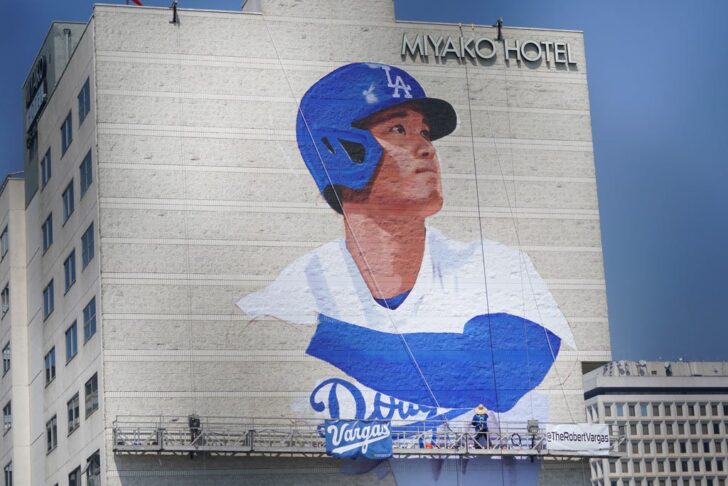
The Los Angeles Dodgers – the new, living embodiment of the “Evil Empire” – could very well hold a key to preventing Major League Baseball from entering into what appears to be an impending collective bargaining disaster.
After the recent trade that brought two-time Cy Young Award winner Tarik Skubal to L.A., the outcry against the guys in blue has become deafening. It’s made the cry for a salary cap in Major League Baseball louder than ever, even as the MLB Players Union fortifies it’s long-standing stance against any sort of cap.
The current collective bargaining agreement expires on the first of December.
No doubt, the Dodgers’ status – with their massive payroll, and their high-profile signings of multiple big-name free agents, and their practice of handing out long-term deferred payment mega-contracts – will be a focal point of the already contentious collective bargaining talks. “This is why there needs to be a cap” will be the stance of some of the hard-line owners.
While Dodger envy is real in 29 other Major League towns – and yes, that includes New York – it really is Los Angeles that could defuse much of the time-bomb situation without yielding any of their on-field power.
What MLB needs is not a salary cap. All caps do is enrich owners and hold down salaries. And just like real life, it’s not the high-priced stars that would feel the pinch. It’s the mid-level guys that would suffer the cutbacks. That’s why the players are so strongly against it.
What is needed is a far more equitable way to share local media rights revenues. The big-market teams that own their own TV networks are doing quite well. The other clubs, not so much. Everyone shares evenly in national TV money… but that’s not the case with the local deals.
As things stand, the Dodgers rake in about $334 million a year from local broadcast rights. In 2014, they inked a 25-year media rights deal that provided them with not only this yearly windfall, but also shielded them from full participation in MLB’s revenue sharing agreements between larger- and smaller-market teams.
At the root of the issue is a bankruptcy court/forced-sale agreement that gives L.A. this brutally unfair financial advantage over the rest of the clubs. Then-Dodgers owner Frank McCourt – who’d been a disaster as an owner – was getting a divorce, which is why the matter ended up in court. MLB helped force him to sell the team as part of the proceedings. The McCourts came out okay. The Dodgers were sold… and the rest of baseball lost.
Over the years, while L.A. has been banking those millions, several other franchises’ local media arrangements have fallen apart, including three members of the National League West. A whole bunch of regional sports networks – like AT&T Sportsnet here in Denver – simply went out of business. In their place came streaming packages that generate a pittance in comparison to L.A.’s deal. There’s no level playing field in sight, and since the agreement provided the Dodgers with that exemption from full participation in revenue sharing, the financial gap between them and the next best financial setups in the league has reached a reported $66 million per year. Of course it’s a lot more than that here… or in San Diego or Phoenix, too.
So here we are. With the financial gap still widening between the Dodgers and the rest of the majors, the TV money matter has finally bubbled to the surface… with collective bargaining now front and center.
So how can the Dodgers help prevent an impending nuclear winter for MLB?
The current L.A. ownership – the Guggenheim Group – could simply agree to tear up the part of the bankruptcy court agreement that exempts them from full participation in revenue sharing. In doing so, they would lessen the financial burden on the smaller market clubs, the ones pushing hardest for a work stoppage and a salary cap.
There will almost certainly be a lockout come the first of December. But if there’s a deal between the owners to share revenue more evenly, then an agreement with the players will be that much easier to reach before any real games are lost next spring.